
Tongue-and-groove vs ledge-and-brace gates
Standard ledge-and-brace suits light side passages under 1 m wide. Framed tongue-and-groove locks boards inside mortised stiles for solid driveways, horizontal slats trim wind load on modern entries, and 5-bar rails suit open rural lanes.
How framing geometry, board orientation and wind gaps decide whether a wooden gate stays square through Irish winters.
Free, no obligation. One local fitter prices it, not five.
- Ledge & bracelightest budget side-gate frame
- Framed T&Grigid solid-privacy driveway leaf
- Slattedcuts wind pressure on exposed drives
- 5-bar railopen countryside & lane access
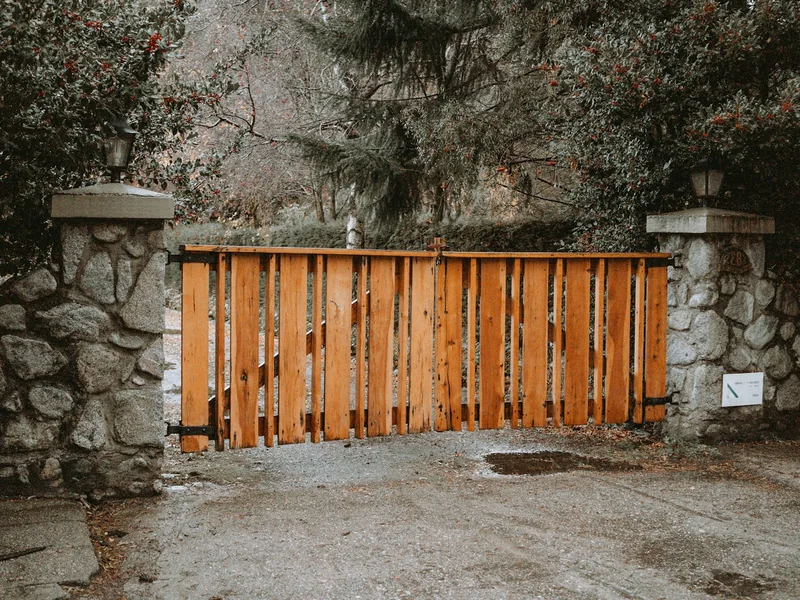
Four wooden gate constructions compared side by side
Two gates cut from the exact same timber species perform completely differently after three Irish winters depending on how the boards are framed. Ledge-and-brace gates screw three horizontal ledges and two diagonal braces onto the back of loose boards, whereas framed tongue-and-groove locks every board inside a continuous mortised perimeter.
Ledge-and-brace
- Privacy level
- Full solid screen
- Wind sail load
- High
- Sag resistance
- Moderate; narrow leaves only
- Typical Irish role
- Budget side passages under 1 m
Framed tongue-and-groove
- Privacy level
- Full solid screen
- Wind sail load
- High
- Sag resistance
- High with mortised stiles
- Typical Irish role
- Driveway pairs & period homes
Horizontal slatted
- Privacy level
- Semi-private shadow gap
- Wind sail load
- Moderate (air passes gaps)
- Sag resistance
- High on steel inner frame
- Typical Irish role
- Modern self-builds & cedar
5-bar open rail
- Privacy level
- Open view
- Wind sail load
- Low
- Sag resistance
- High with diamond brace
- Typical Irish role
- Rural lanes & paddocks
Explore full joinery details on mortise-and-tenon gate joinery or compare a metal skeleton on steel-framed wooden gates.
Price my wooden gate
Four quick taps show our Irish timber gate price before we ask for a number. One local fitter rings you, not five.
Pressure-treated softwood gates, about 3 m wide, manual: €1,400 to €2,200, supplied and fitted.
How the wooden gate price is worked out
The range reflects going Irish supply-and-fit timber gate rates for that species, opening width and operation. Manual figures cover the made-to-measure leaves, galvanised or stainless hanging ironwork, latches and fitting between sound piers or hanging posts. Electric options add wind-rated motors, photocells and handsets. New masonry piers, buried timber posts, factory UV oiling and SWA power trenching depend on your entrance and are itemised after a look. Ask whether VAT applies at 13.5% or 23%.
Matching board layout to site exposure
- Keep simple ledge-and-brace gates under 1,000 mm wide. Without vertical outer stiles, exposed side boards take direct impact from wall latches and rack out of square across driveway spans.
- Demand rebated stiles on framed tongue-and-groove pairs. Setting the vertical boards into milled channels inside 70 mm to 94 mm stiles shields vulnerable board edges from driving rain.
- Add a slatted top panel on windy coastal driveways. Breaking the upper third into vertical palings or spaced horizontal slats keeps lower-level privacy while slashing wind strain on hinges and motors.
- Space horizontal slats by 5 mm to 10 mm. Horizontal boards hold rainwater along their top edges far longer than vertical tongue-and-groove, so bevelled top edges and drainage gaps prevent winter rot.
Check fitted costs for each gate build on wooden gate prices.
More timber gate guides
 Mortise-and-tenon joineryWhy wedged tenons, hardwood dowels and drainage rebates outlast screws.
 Swelling and sagging fixesExpansion gaps, rising braces and moisture control for wet Irish winters.
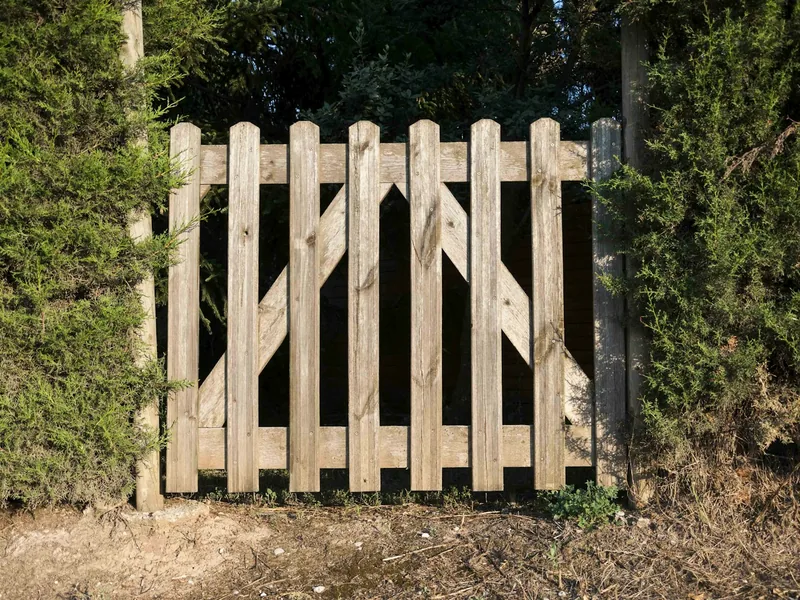 Wooden side gatesMade-to-measure side passage gates from €280 fitted in softwood or hardwood.
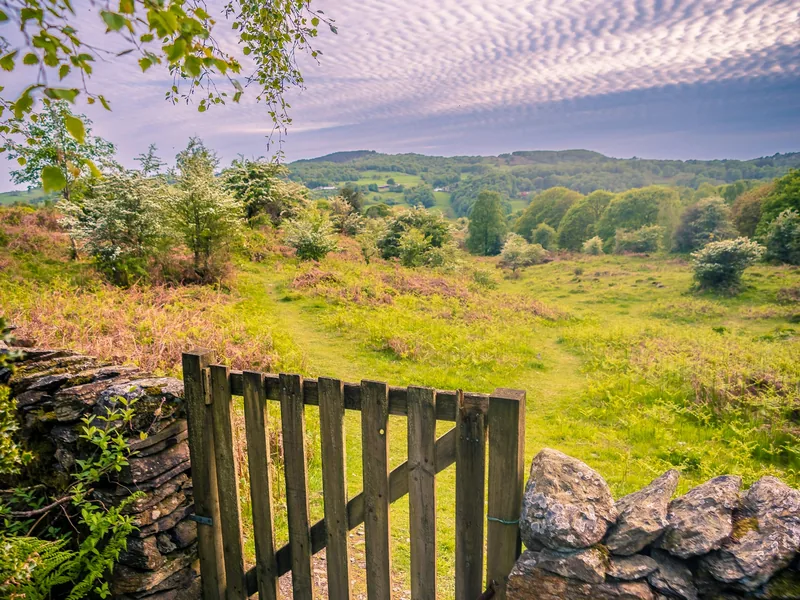 Treated softwood gatesPressure-treated Scandinavian red deal driveways and garden passages.
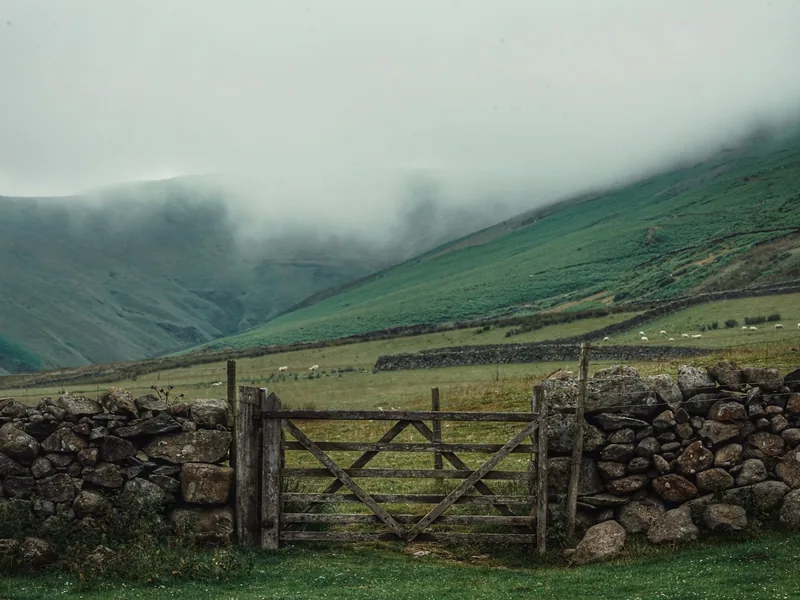 5-bar timber field gatesDiamond-braced and universal 5-bar country gates in pine, oak or iroko.
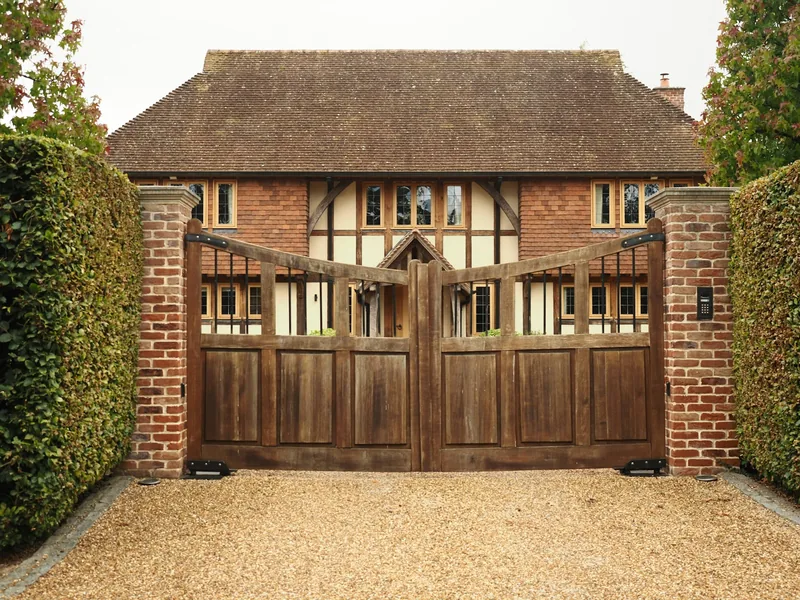 Wooden gate pricesFull Irish cost breakdown across softwood, cedar, oak, iroko and motors.
Gate construction questions
What is the difference between framed ledge-and-brace and standard ledge-and-brace?
Standard ledge-and-brace leaves have no outer vertical framing stiles around the edges. Framed ledge-and-brace encloses all four edges inside heavy mortise-and-tenon stiles and rails, boosting stiffness and lock security.
Are vertical tongue-and-groove boards more durable than horizontal slats?
Vertical V-grooves shed rainwater straight down off the leaf, drying faster between Irish showers. Horizontal slats look contemporary yet need slightly bevelled edges and breathable oil to avoid water pooling.
Which wooden gate design handles rural gale winds without failing?
Open 5-bar timber gates pass wind freely. If you need privacy on an exposed drive, choose hit-and-miss vertical boards or a steel-framed gate with a slatted upper third.
Can you fit a mortise deadlock into a plain ledge-and-brace side gate?
Not easily, because thin 19 mm boards leave no depth for a lock case. Framed gates with 45 mm to 70 mm stiles accept secure deadlocks cleanly.
Every timber gate page and guide
Timber gate types
Joinery & care guides
Prices, rules & counties
Compare wooden gate styles on cost
Pick timber and opening width in four taps before one local joiner visits.