
EN 350 timber durability classes
Under I.S. EN 350, iroko heartwood ranks Class 1–2 (25–40 yrs), European oak and imported cedar rank Class 2–3, and pressure-treated Scots pine delivers Use Class 4 posts whereas refractory spruce should stay out of wet ground.
Heartwood decay ratings, sapwood limits, Scots pine vs spruce treatability and Use Class 4 post rules for Irish gates.
Free, no obligation. One local fitter prices it, not five.
- Class 1–2iroko heartwood (EN 350)
- Class 2–3oak & imported cedar heartwood
- Class 3–4Scots pine, deep UC4 treatability
- Class 5all sapwood across every species
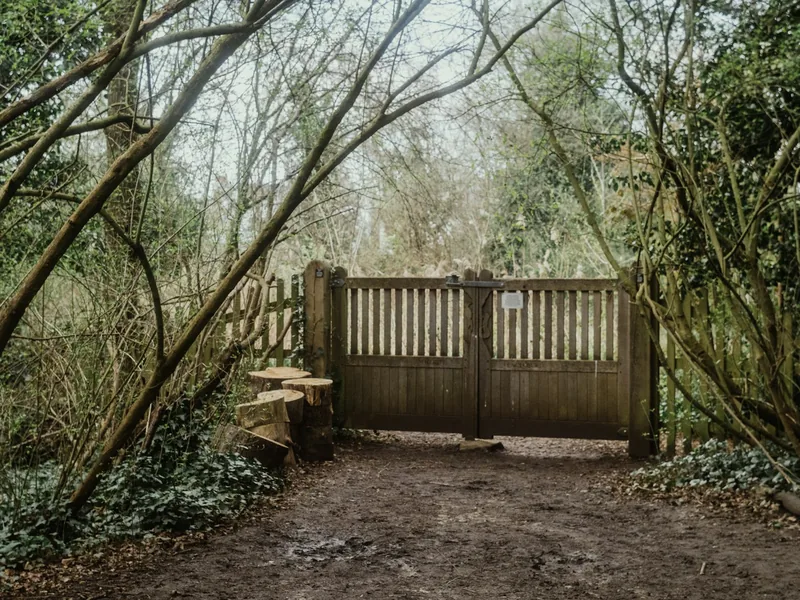
I.S. EN 350 durability classes for Irish gate timbers
European standard I.S. EN 350 grades the natural fungal resistance of timber heartwood from Class 1 (Very Durable) down to Class 5 (Not Durable), paired with EN 335 Use Classes describing how wet the wood stays in service. Knowing these two tables lets you compare quotes accurately instead of relying on vague merchant labels.
Iroko (Milicia excelsa)
- EN 350 Heartwood
- Class 1–2
- Use Class 4 (ground) rule
- Naturally durable heartwood; still kept 50 mm off wet gravel
- Typical Irish gate life
- 25 to 40 years
European oak (Quercus robur)
- EN 350 Heartwood
- Class 2–3
- Use Class 4 (ground) rule
- Heartwood posts last 15 to 25 years in soil; exclude sapwood completely
- Typical Irish gate life
- 20 to 35 years
Western red cedar (Thuja plicata)
- EN 350 Heartwood
- Class 2–3
- Use Class 4 (ground) rule
- Unsuitable for direct soil contact; keep in Use Class 3 above ground
- Typical Irish gate life
- 15 to 25 years
Scots pine / red deal (Pinus sylvestris)
- EN 350 Heartwood
- Class 3–4
- Use Class 4 (ground) rule
- Accepts deep vacuum-pressure preservative for Use Class 4 posts and rails
- Typical Irish gate life
- 10 to 18 years treated
Norway spruce / white deal (Picea abies)
- EN 350 Heartwood
- Class 4–5
- Use Class 4 (ground) rule
- Refractory heartwood resists deep treatment; avoid for buried gate posts
- Typical Irish gate life
- 8 to 12 years above ground
Compare individual gate pages: iroko, European oak, western red cedar and treated softwood.
Price my wooden gate
Four quick taps show our Irish timber gate price before we ask for a number. One local fitter rings you, not five.
Iroko hardwood gates, about 3 m wide, manual: €3,500 to €5,600, supplied and fitted.
How the wooden gate price is worked out
The range reflects going Irish supply-and-fit timber gate rates for that species, opening width and operation. Manual figures cover the made-to-measure leaves, galvanised or stainless hanging ironwork, latches and fitting between sound piers or hanging posts. Electric options add wind-rated motors, photocells and handsets. New masonry piers, buried timber posts, factory UV oiling and SWA power trenching depend on your entrance and are itemised after a look. Ask whether VAT applies at 13.5% or 23%.
Applying Use Class 3 and Use Class 4 on your driveway
- Use Class 3 covers gate leaves hanging clear of the ground. Exterior timber exposed to rain and wetting yet separated from soil by a 50 mm to 75 mm air gap sits in EN 335 Use Class 3.2.
- Use Class 4 covers buried hanging posts. Any timber post set directly in Irish clay or surrounded by concrete sits in Use Class 4 and must either be heartwood oak/iroko or vacuum-pressure treated Scots pine certified to UC4.
- Sapwood is ALWAYS Class 5 (Not Durable). Even on expensive European oak, pale outer sapwood rots almost as quickly as untreated white deal if left on a buried post or lower gate rail.
- Treatability separates Scots pine from spruce. Under EN 350, Scots pine sapwood is Class 1 to 2 treatable (absorbs copper preservative deeply), while spruce heartwood is Class 4 refractory and resists deep treatment.
See how post collars and concrete footing drains protect UC4 timber on posts and ground clearance.
More timber gate guides
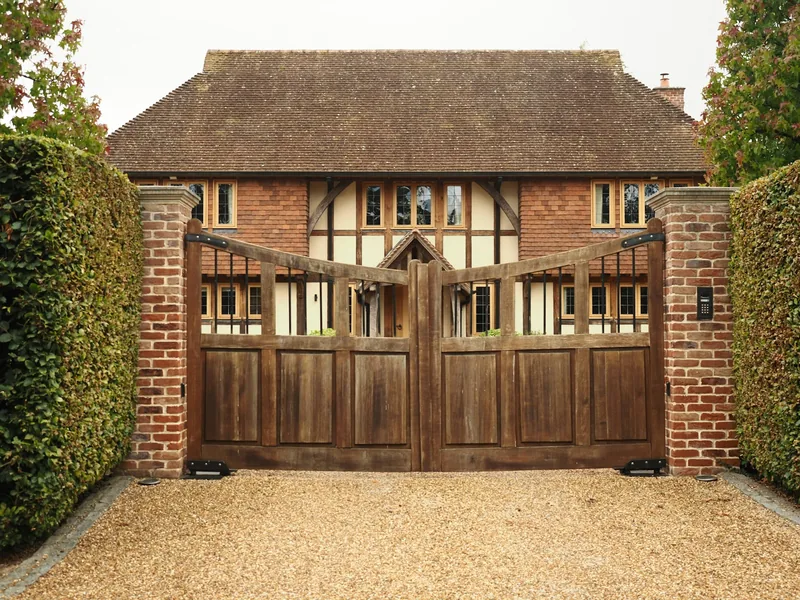 Iroko hardwood gatesDense Class 1–2 African hardwood built for 25 to 40 years outdoors.European oak gatesTraditional mortise-and-tenon oak leaves with tannin-safe stainless fixings.
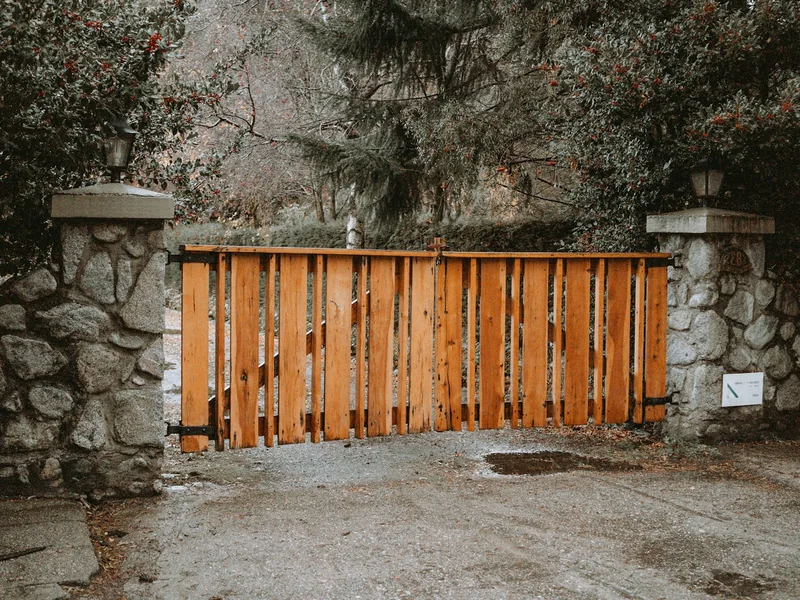 Western red cedar gatesLightweight reddish-amber boards suited to slatted and contemporary entries.
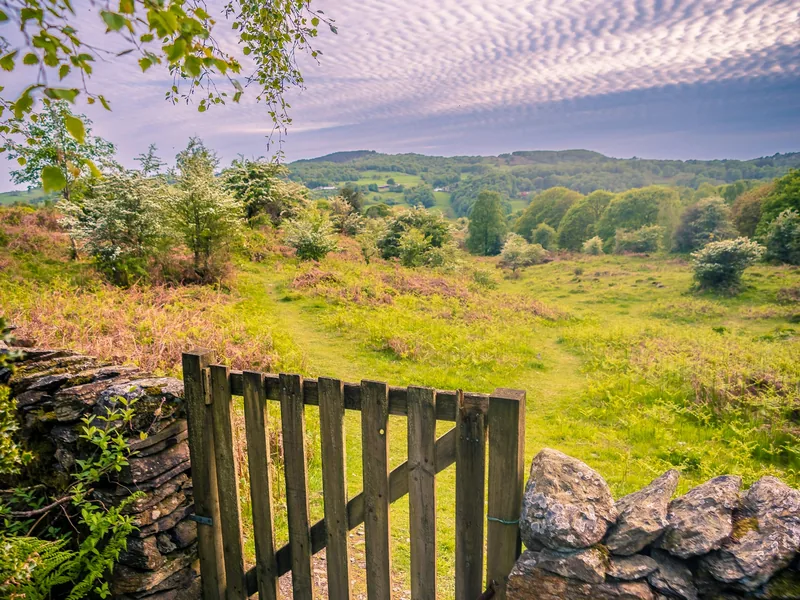 Treated softwood gatesPressure-treated Scandinavian red deal driveways and garden passages.
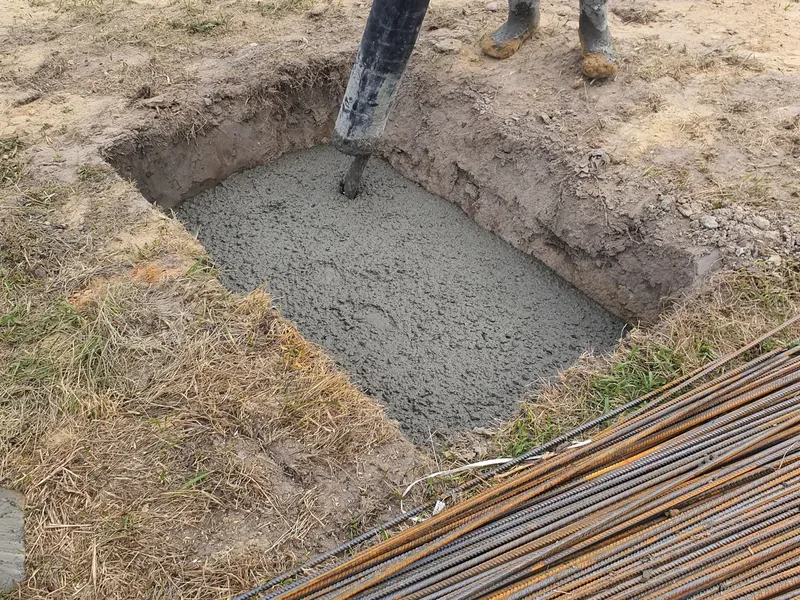 Posts and ground clearanceConcrete depths, UC4 pine vs oak posts and 50 to 75 mm splash gaps.
 UV oil vs wood stainChoosing breathable exterior oil, microporous stain or natural silvering.
Timber durability questions
What does EN 350 Class 1 to 2 mean for a wooden gate?
It confirms the timber's natural heartwood resists wood-destroying fungi in exposed outdoor service without needing industrial pressure-treatment chemicals.
Why do pressure-treated spruce posts rot faster than Scots pine posts?
Spruce cell pits close during drying, blocking vacuum-pressure preservative from penetrating more than a couple of millimetres. Scots pine accepts deep impregnation to meet Use Class 4.
Is home-grown cedar as durable as imported Canadian western red cedar?
Slow-grown North American western red cedar heartwood typically grades EN 350 Class 2, whereas faster-grown local cedar often sits in Class 3 to 4.
Do gate leaves themselves need Use Class 4 treatment?
No. Provided the bottom rail clears wet gravel or tarmac by 50 mm to 75 mm, gate leaves sit in Use Class 3 (above ground). Use Class 4 is essential for posts buried in soil or concrete.
Every timber gate page and guide
Timber gate types
Joinery & care guides
Prices, rules & counties
Pick a timber rated for your site
Compare softwood, cedar, oak and iroko fitted prices in four quick taps.