
Mortise-and-tenon gate joinery
Interlocking mortise-and-tenon joints with 70 mm to 94 mm stiles, D4 exterior glue, hardwood dowels and drained bottom rails resist nose sag for decades where screwed butt joints fail within two Irish winters.
What happens inside a wooden gate frame, why screwed yard gates drop early, and five workshop specs to inspect.
Free, no obligation. One local fitter prices it, not five.
- 70–94 mmheavy driveway stile & rail depth
- Through-wedgedlocks tenons against wind racking
- Hardwood pegsdraw-bore joints tight without rust
- Drip groovesshed rain off bottom rail faces
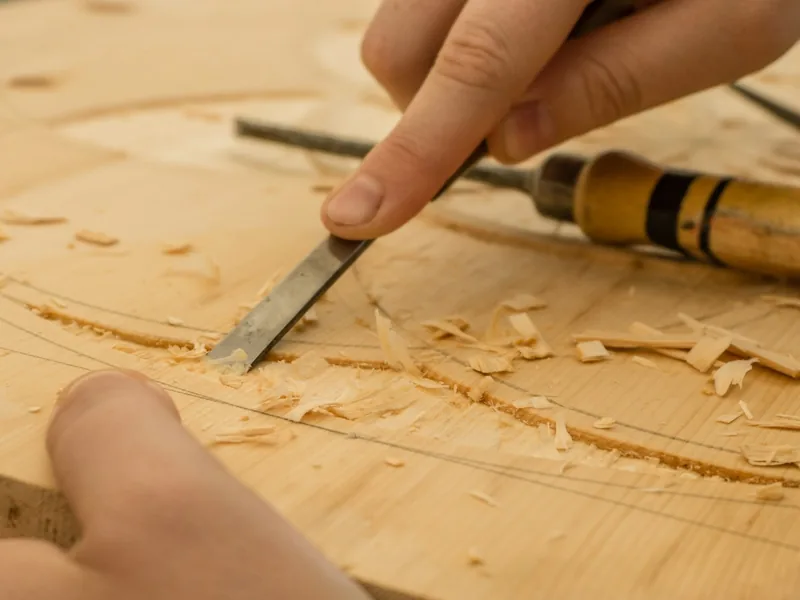
Why traditional joinery outlives screwed frames by decades
A wooden driveway leaf works as a permanent cantilever hanging off two hinges on one vertical edge. Every time the gate opens, gravity tries to drop the nose and pry the upper corner joint apart. Screws driven into end grain lose grip as timber expands and contracts; interlocking mortise-and-tenon joinery resists racking through raw wood-on-wood bearing area.
Butt-jointed & screwed
- Strength under Irish wind
- Poor: twists once wood shrinks
- Water resistance
- End grain exposed directly to rain
- Typical gate grade
- Cheap DIY garden gates
Dowelled butt joint
- Strength under Irish wind
- Fair on light side leaves
- Water resistance
- Glue line degrades under cyclic damp
- Typical gate grade
- Mid-range merchant stock
Stub mortise-and-tenon
- Strength under Irish wind
- Strong on side & narrow pairs
- Water resistance
- Protected inside blind stile pocket
- Typical gate grade
- Quality residential joinery
Through-wedged haunched tenon
- Strength under Irish wind
- Maximum mechanical interlock
- Water resistance
- Zero movement even if glue ages
- Typical gate grade
- Bespoke oak & iroko driveways
Pairing solid joinery with European oak or iroko creates a self-supporting leaf that needs no steel sub-frame. Compare European oak gates and iroko hardwood gates.
Price my wooden gate
Four quick taps show our Irish timber gate price before we ask for a number. One local fitter rings you, not five.
Iroko hardwood gates, about 3 m wide, manual: €3,500 to €5,600, supplied and fitted.
How the wooden gate price is worked out
The range reflects going Irish supply-and-fit timber gate rates for that species, opening width and operation. Manual figures cover the made-to-measure leaves, galvanised or stainless hanging ironwork, latches and fitting between sound piers or hanging posts. Electric options add wind-rated motors, photocells and handsets. New masonry piers, buried timber posts, factory UV oiling and SWA power trenching depend on your entrance and are itemised after a look. Ask whether VAT applies at 13.5% or 23%.
Five workshop details that prove proper gate joinery
- Ask for haunched mortise-and-tenon top and bottom rails. The stepped haunch stops the rail twisting out of plane inside the stile as seasonal humidity shifts.
- Waterproof D4 polyurethane or epoxy adhesive inside every mortise. Ordinary interior PVA softens in outdoor damp; external D4 PU glue bonds oily hardwoods like iroko and oak reliably.
- Draw-bored hardwood dowels pin the joint mechanically. Offsetting the dowel hole by 1 mm pulls tenon shoulders dead tight against the stile even before glue sets.
- Stop bottom-rail water traps with open-bottom grooves. Never sit vertical tongue-and-groove boards inside a blind pocket in the bottom rail; water runs down the grooves and rots the hidden board ends inside three years.
- Slope the top edge of horizontal rails slightly. A 5-degree weathering bevel throws rainwater clear of the stile shoulders instead of letting droplets wick into the joint line.
If you prefer zero timber movement on very wide or automated drives, compare steel-framed wooden gates.
More timber gate guides
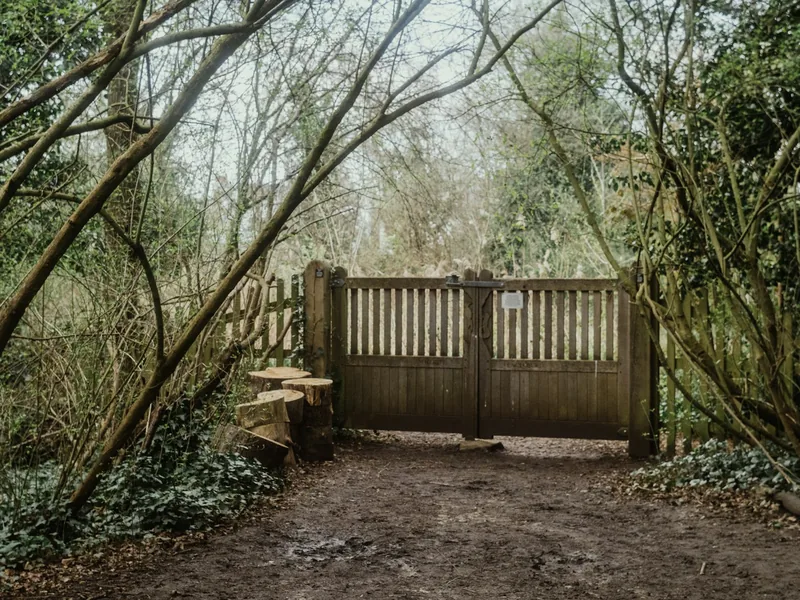 European oak gatesTraditional mortise-and-tenon oak leaves with tannin-safe stainless fixings.
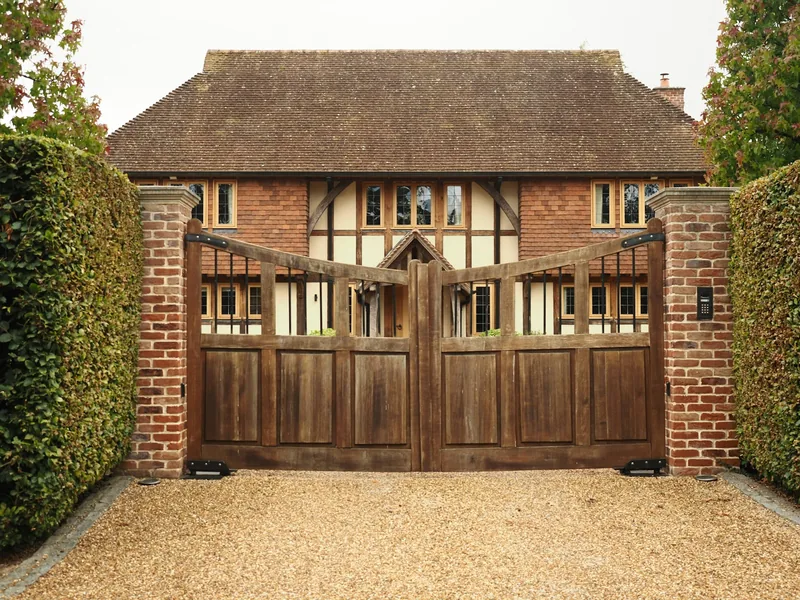 Iroko hardwood gatesDense Class 1–2 African hardwood built for 25 to 40 years outdoors.
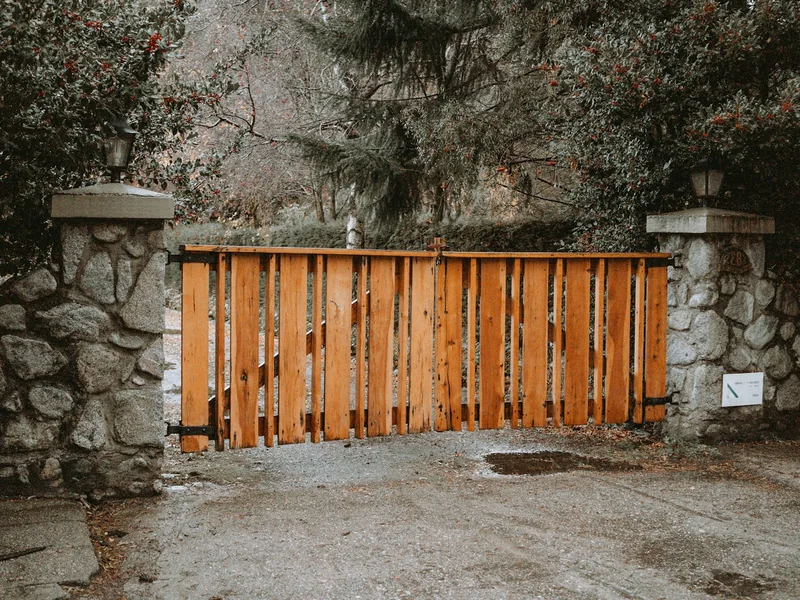 Boarded vs ledge-and-braceComparing framed tongue-and-groove, ledge-and-brace and open-rail designs.
 Swelling and sagging fixesExpansion gaps, rising braces and moisture control for wet Irish winters.
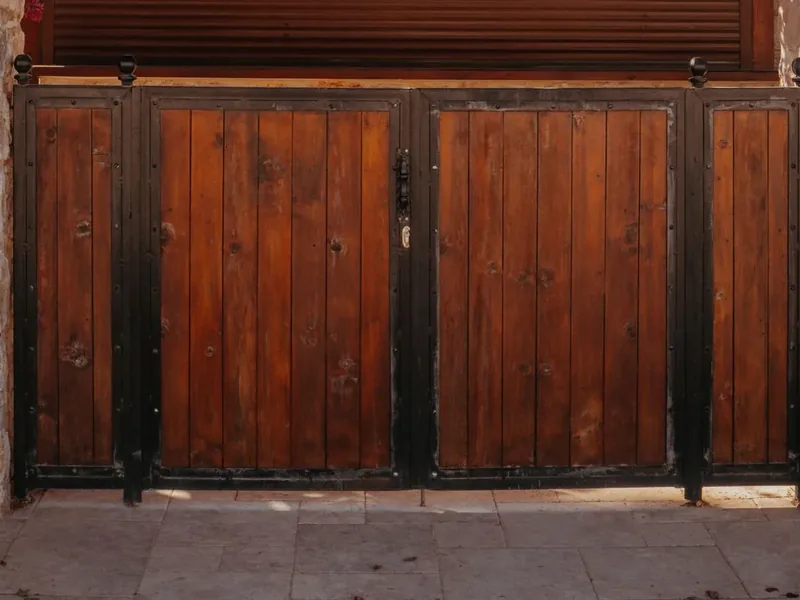 Steel-framed wooden gatesGalvanised box-section inner steel frames that stop boards sagging.
 Timber hinges and locksHook-and-band straps, adjustable field hooks and A4 stainless fasteners.
Timber joinery questions
How thick should mortise-and-tenon driveway gate frames be?
Side gates perform cleanly at 45 mm finished thickness, whereas double driveway gates spanning 3 m to 4 m should use 70 mm to 94 mm finished frame sections.
Why do bottom rails rot faster than top rails on boarded gates?
Rainwater runs down vertical boards and collects inside blind bottom-rail channels. Proper gate joinery notches boards over the bottom rail or cuts drainage slots underneath.
Are oak pegs better than metal screws inside a mortise joint?
Yes. Draw-bored hardwood dowels expand and contract at the same rate as the frame and never trigger black tannin staining in oak or cedar.
Can softwood gates be made with mortise-and-tenon joints?
Yes. Workshop-made slow-grown Scandinavian pine pairs (€800 to €1,500 supply only) use full mortise-and-tenon framing and last years longer than screwed yard panels.
Every timber gate page and guide
Timber gate types
Joinery & care guides
Prices, rules & counties
Ask a local joiner for a written spec
Pick your timber species and opening width; one local fitter in your county follows up.